

Few situations in life feel as frightening and high-stakes as realizing someone you care about may be thinking about suicide. The fear of saying the wrong thing, making the situation worse, or bearing the weight of someone’s life on your shoulders can be paralyzing. Many people, faced with this moment, say nothing at all — not because they do not care, but because they are terrified of making a mistake.
Here is the most important thing you need to know: asking someone about suicide does not put the idea in their head. This is one of the most persistent and dangerous myths in mental health. Decades of research have consistently shown that asking directly about suicidal thoughts actually reduces distress, opens the door to help, and can be a lifesaving intervention. Your willingness to have this conversation could be the reason someone chooses to stay alive.
This guide provides practical, evidence-based advice on how to recognize warning signs, start the conversation, choose your words carefully, and connect the person with professional help.
Recognizing the Warning Signs
Before you can have the conversation, you need to recognize when it is necessary. Suicidal individuals often communicate their distress — sometimes directly, sometimes through behavior changes. The more warning signs present simultaneously, the higher the level of concern.
Verbal Warning Signs
- Talking about wanting to die or wanting to kill themselves.
- Expressing feelings of hopelessness: “Things will never get better.”
- Saying they feel like a burden: “Everyone would be better off without me.”
- Talking about having no reason to live or no sense of purpose.
- Saying goodbye to people in ways that feel final or unusual.
- Talking about feeling trapped: “There is no way out.”
- Expressing unbearable emotional or physical pain.
Behavioral Warning Signs
- Withdrawing from friends, family, and social activities.
- Giving away prized possessions.
- Researching methods of suicide online.
- Increased use of alcohol or drugs.
- Sleeping too much or too little.
- Acting recklessly or engaging in risky behavior without regard for consequences.
- Visiting or calling people to say goodbye.
- Putting affairs in order — updating a will, settling debts, writing letters.
- A sudden calmness or improvement in mood after a period of severe depression (this can indicate a decision has been made).
Situational Risk Factors
- Recent loss — relationship breakup, death of a loved one, job loss, financial crisis.
- History of previous suicide attempts (the single strongest predictor of future attempts).
- Access to lethal means, particularly firearms.
- Chronic pain or terminal illness diagnosis.
- Recent discharge from a psychiatric hospital or emergency room.
- History of trauma, abuse, or PTSD.
- Social isolation and lack of support systems.
For a detailed examination of veteran-specific risk factors and interventions, visit our guide on veteran suicide prevention.
How To Start the Conversation
There is no perfect script, and waiting for the perfect moment means waiting too long. Here are approaches that mental health professionals recommend:
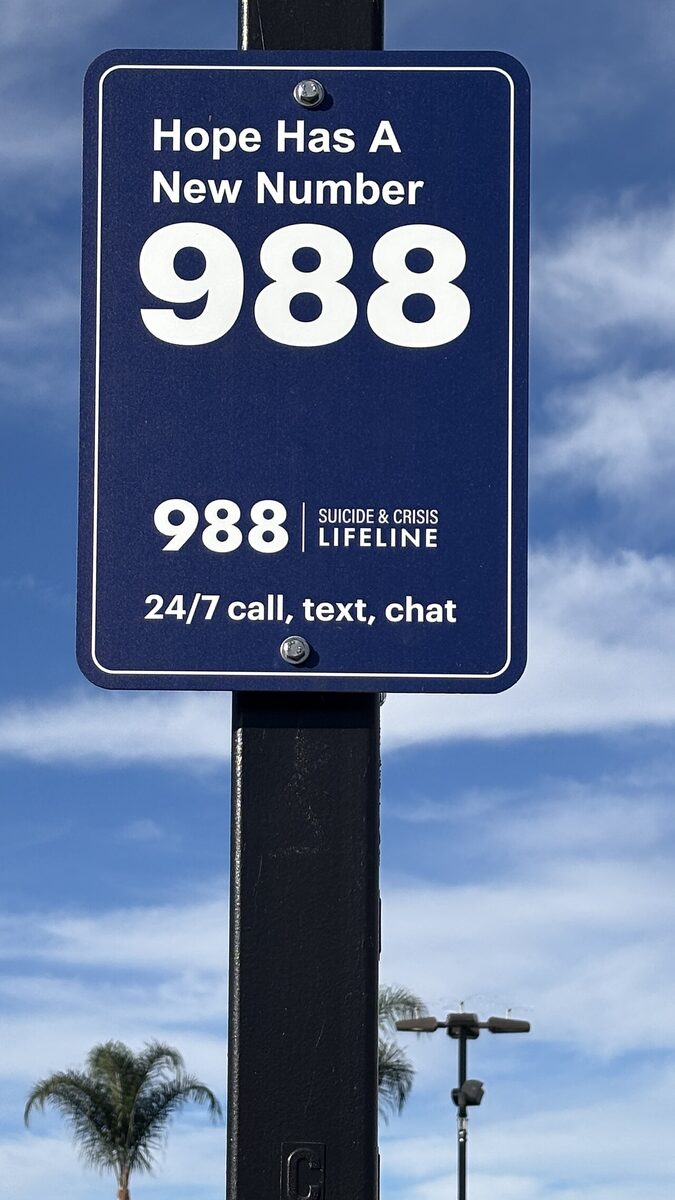
Image: Alexis Doine via Wikimedia Commons | CC0 (Public Domain) via Wikimedia Commons
Be Direct, But Compassionate
You do not need to dance around the subject. In fact, indirect approaches often allow the person to deflect without addressing what is really happening. The key is to be direct while communicating genuine care.
Effective openers:
- “I have been worried about you. Are you thinking about suicide?”
- “I care about you, and I need to ask you something difficult. Have you been having thoughts of ending your life?”
- “You mentioned feeling like there is no way out. I want to understand what you mean by that. Are you thinking about hurting yourself?”
- “I have noticed some changes in you lately, and I want to check in. Are you having suicidal thoughts?”
Notice that each of these uses the word “suicide” directly. Using clear language removes ambiguity and signals that this is a topic you are willing to discuss openly, without shame.
Choose the Right Setting
- Find a private, quiet space where you will not be interrupted.
- In-person conversations are ideal, but phone or video calls are far better than not reaching out at all.
- Avoid public settings where the person may feel embarrassed or unable to speak freely.
- Turn off your phone and give the person your complete attention.
Words That Help
What you say during this conversation matters enormously. The goal is to create a space where the person feels heard, validated, and not judged. Here are phrases that research and clinical experience have shown to be effective:
- “I am here for you, and I am not going anywhere.” — Communicates commitment and presence.
- “You are not a burden. Your pain is real, and it matters to me.” — Directly counters the most common suicidal belief.
- “I cannot fully understand what you are going through, but I want to try.” — Honest and humble, avoids false claims of understanding.
- “You do not have to go through this alone.” — Addresses the isolation that fuels suicidal thinking.
- “Would you be willing to talk to someone who can help?” — Gently introduces the idea of professional support.
- “Can we make a plan together to keep you safe tonight?” — Collaborative and immediate, focuses on the next few hours.
- “What has helped you get through difficult times before?” — Activates the person’s own coping resources and memories of resilience.
Words To Avoid
Even with the best intentions, certain phrases can shut down the conversation, increase shame, or inadvertently minimize the person’s pain. Avoid these:
- “You have so much to live for.” — While well-intentioned, this dismisses their current reality. A suicidal person cannot see those reasons through their pain.
- “Think about how your family would feel.” — Adds guilt to an already overwhelming emotional burden. Many suicidal individuals genuinely believe their family would be better off.
- “Other people have it worse.” — Invalidates their suffering and discourages further disclosure.
- “Suicide is selfish.” — Stigmatizing, shaming, and factually inaccurate. Suicidal individuals often believe they are being selfless by removing a perceived burden.
- “Just think positive” or “Choose happiness.” — Fundamentally misunderstands the nature of suicidal depression. If they could simply choose not to feel this way, they would.
- “Promise me you will not do it.” — Puts an unfair burden on the person and can backfire if they feel they have failed by continuing to have suicidal thoughts.
- “I know exactly how you feel.” — Unless you have experienced suicidal ideation yourself, this claim rings hollow and can feel dismissive.
Listen More Than You Speak
The most powerful thing you can do in this conversation is listen. Not listen to respond, not listen to fix, not listen while planning your next sentence — just listen. Allow silences. Do not rush to fill them. Let the person speak at their own pace, even if what they say is difficult to hear.
Active listening techniques:

Image: U.S. Navy / Photographer's Mate 1st Class Shane T. McCoy | Public domain via Wikimedia Commons
- Maintain gentle eye contact (if in person).
- Nod and use brief verbal acknowledgments: “I hear you,” “Go on,” “That makes sense.”
- Reflect back what they have said: “It sounds like you have been feeling trapped for a while.”
- Resist the urge to immediately problem-solve. The person needs to feel heard before they can consider solutions.
- Do not interrupt or redirect the conversation to your own experiences.
When To Call for Immediate Help
There are situations where the conversation alone is not enough, and you need to involve professional help immediately. Call 911 or take the person to the nearest emergency room if:
- They have a specific plan and access to the means to carry it out.
- They have a timeline: “I am going to do it tonight” or “I have already decided.”
- They have already taken steps — ingested pills, obtained a weapon, written a note.
- They are intoxicated and expressing suicidal intent (alcohol and drugs dramatically increase impulsivity and lethality).
- You believe they are in immediate danger, even if they deny it.
You may worry about “overreacting.” You may worry about damaging the relationship. But erring on the side of caution when someone’s life is at stake is always the right choice. A living person who is temporarily upset with you is infinitely better than the alternative.
After the Conversation: Follow-Up Matters
The conversation does not end when you leave the room or hang up the phone. Suicidal crises can ebb and flow, and consistent follow-up communicates that your concern was genuine, not performative.
- Check in the next day and in the days that follow. A simple text: “Thinking of you. How are you doing today?”
- Help them connect with professional resources — offer to make the call together, drive them to an appointment, or sit with them while they dial.
- If they mentioned access to lethal means (especially firearms), work with them — or with their family — to temporarily remove or secure those means. Means restriction is one of the most effective suicide prevention strategies.
- Take care of yourself. Supporting someone through a suicidal crisis is emotionally exhausting. Talk to your own support system. Consider seeing a therapist yourself. You cannot pour from an empty cup.
For a comprehensive guide on supporting veterans and service members specifically, including specialized resources and VA crisis services, read our detailed article on how to help a veteran in crisis.
Resources
Keep these numbers saved in your phone and share them freely:
- 988 Suicide and Crisis Lifeline: Call or text 988 (24/7). Veterans press 1 for the Veterans Crisis Line.
- Crisis Text Line: Text HOME to 741741.
- International Association for Suicide Prevention: Find a crisis center in your country.
- Trans Lifeline: 877-565-8860 (US) or 877-330-6366 (Canada).
- Trevor Project (LGBTQ+ youth): 1-866-488-7386 or text START to 678-678.
Your willingness to have this conversation — imperfect, uncomfortable, and uncertain as it may be — can save a life. Do not let fear of saying the wrong thing stop you from saying anything at all.
If you or someone you know is in immediate danger, call 911. For crisis support, contact the 988 Suicide and Crisis Lifeline by calling or texting 988.