
A casino floor might seem like a world away from the military, but the two have more in common than you might expect. Casinos need people who can stay calm under pressure, follow instructions and deal with all kinds of situations as they arise. Those are skills many military veterans already have. That’s one reason gaming companies such as Caesars Entertainment have made an effort to attract people with military backgrounds.
Online casinos such as ToonieBet also rely on a large workforce behind the scenes. Launched in 2024, ToonieBet Casino illustrates the role of these sites in creating jobs by employing people to manage its 24/7 live chat, phone support, and payment services. ToonieBet is a legal Canadian platform regulated by the Tobique Gaming Commission (License No. 0000050) and provides 5,000+ games.
In this article, we’ll take a look at why military experience can be valuable in the gaming industry.
Discipline Transfers Directly
Discipline is a key consideration when applying for any work position. Casino operators stress discipline because the employee will be interacting with customers all the time. Live dealers at online casinos must also meet this requirement to effectively interact with players using the live chat system.
Service tends to instil habits of routine and adherence to procedure. Timekeeping, presentation and chain-of-command habits are drilled in, and those small details are what make someone fit easily into a casino setting.
Casinos also run on written procedure that everyone must follow. An ex-military member will have no problem maintaining the specified dress code or language because they’re used to doing this in the service. Put simply, they can slot seamlessly into the organization.
Focus and Situational Awareness
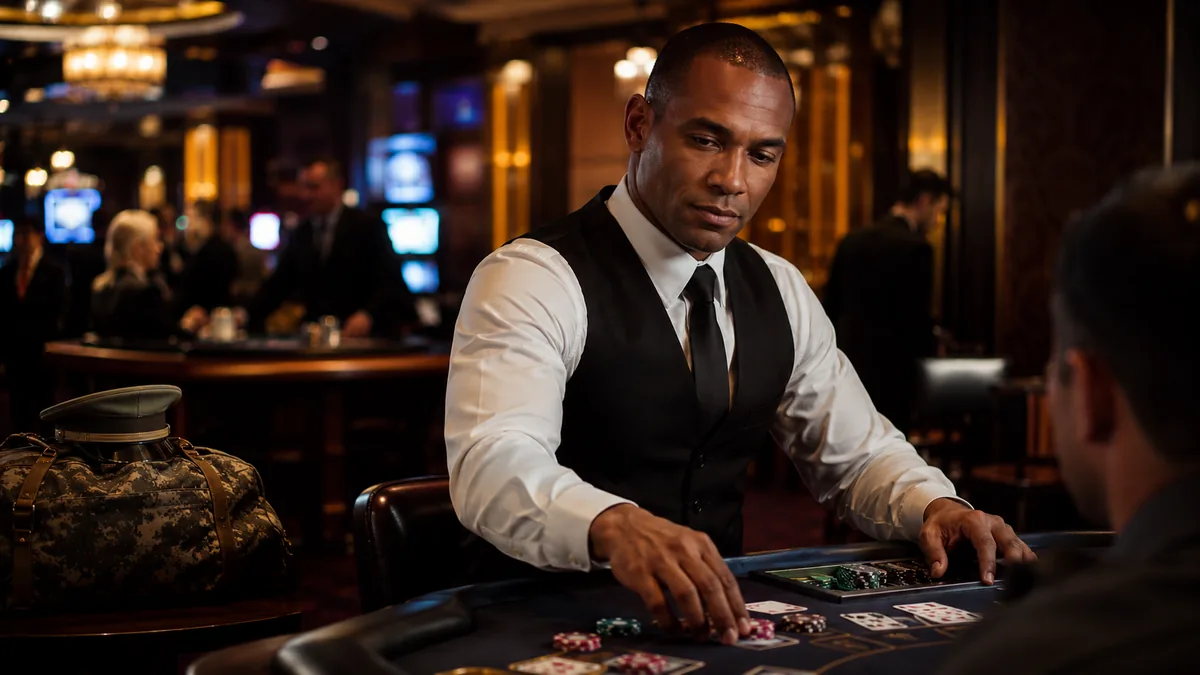
Casino employees must always stay focused and alert in all situations. Even a lapse at the table can mean a misread hand, a miscounted payout or a missed procedural step. That’s especially true for dealers managing poker and blackjack tables where skill and focus matter. Staying focused can also help dealers spot cheating players or suspicious gaming patterns.
Situational awareness is trained explicitly in service, which transfers to roles where attention lapses have consequences. Working in unpredictable environments reinforces it further.
Staying Calm in Chaotic Moments
Whether you’re looking for a job at a land-based casino in Toronto or becoming a live chat agent at ToonieBet, working under pressure is a key requirement. Players often subject casino employees to unwanted situations, such as disputing results or being rude in conversations. On top of that, casino resorts often sell alcohol, meaning players can get drunk and misbehave.
A casino employee must stay calm and collected under immense pressure. Thankfully, this is all part of the military training lessons. That training emphasises assessing a situation before reacting to it. A casino dealer with a military background would hear out a dispute before escalating it.
Fitness is Part of the Requirements
Physical stamina matters more in these roles than the job description usually suggests. A roulette dealer stands for an entire shift while maintaining posture, hand precision and an even manner with the table.
Some operators cite that background as a plus for physically demanding floor roles. One UK study, though based on a small sample of 35 veterans, found that ex-servicemen reported better health than non-veterans later in life, and attributed it to training habits formed during service. The sample is too small to generalise from, but it points at something recruiters report anecdotally: service leaves many people with an established fitness routine they keep afterwards.
Big Challenge: Veterans Struggle to Transition to Civilian Life
One of the main challenges that ex-servicemen face is transitioning to civilian life. According to the American Addiction Center, a substantial share of military veterans struggle to adjust to civilian settings. Some of the reasons why they struggle include:
- Leaving their tight-knit community can reduce their sense of purpose.
- Lack of enough skills to get new employment.
- Traumatic experiences, especially after the 9/11 event.
- Physical injuries they got while on duty can limit employment chances.
Employment is one part of that transition, and gaming is one of several sectors where the skills carry over into dealer, floor and support roles. It is worth saying plainly that the fit is not automatic: veterans are also a group with documented above-average rates of gambling problems, which makes the industry’s recruitment relationship with them one that deserves handling with some care on both sides.