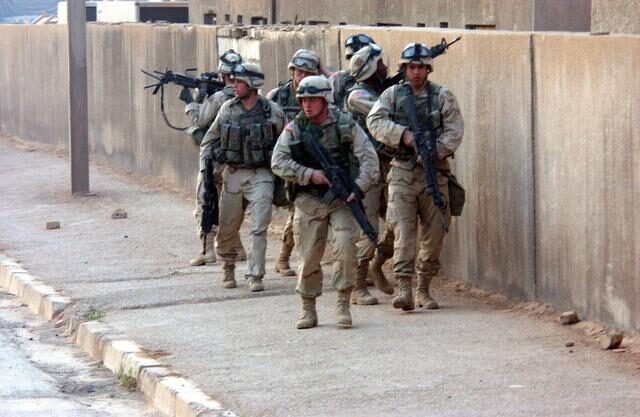
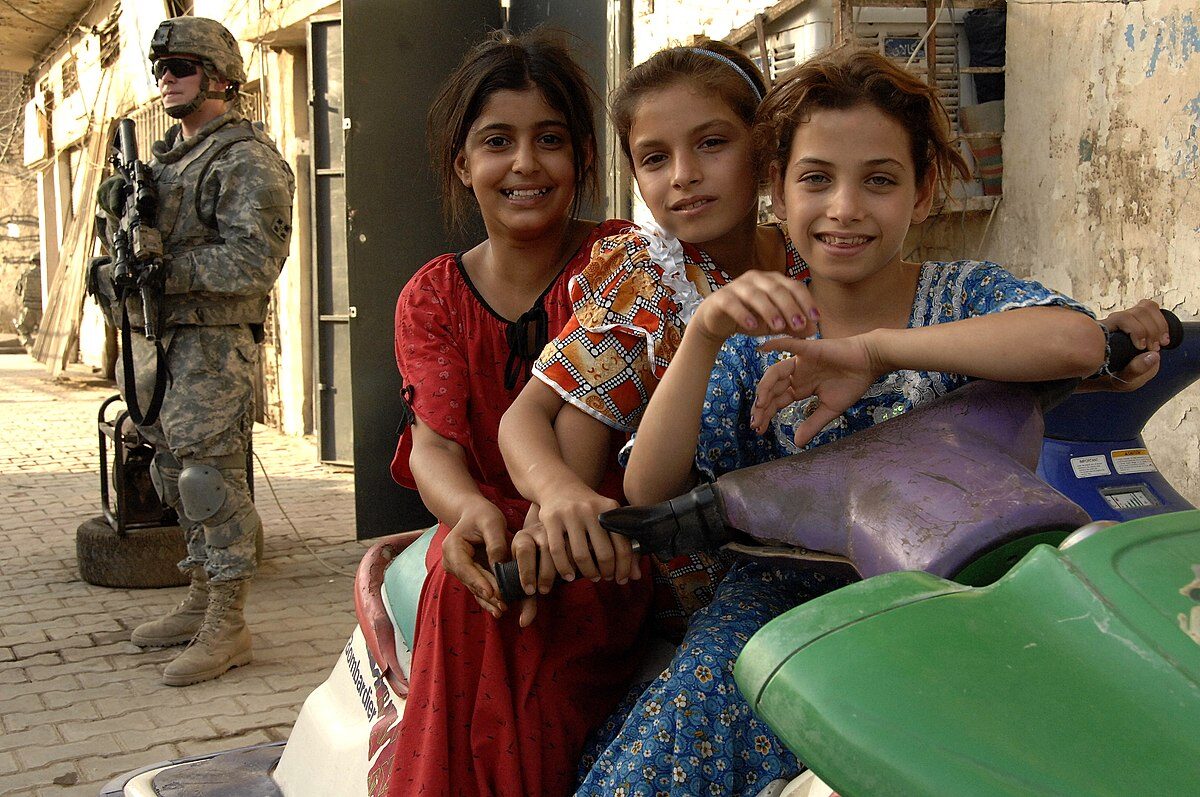
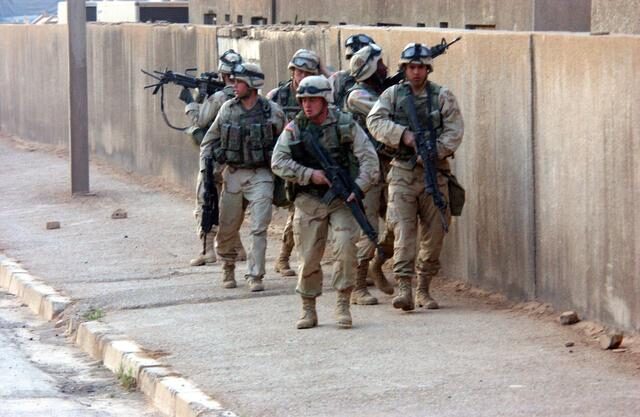
Image: Spc. Chuck Gill, U.S. Army | Public domain via Wikimedia Commons
Mental Health
PTSD in Iraq War Veterans: Understanding Combat Trauma and the Path to Recovery
Daniel CarterAuthor
March 2, 2026 8 min read
Post-Traumatic Stress Disorder (PTSD) affects an estimated 11-20% of veterans who served in Operations Iraqi Freedom and Enduring Freedom, according to the U.S. Department of Veterans Affairs. For Ronnie McNutt — a U.S. Army Reserve veteran who deployed to Iraq in 2007 and 2008 — PTSD was a defining struggle of his post-military life, one that contributed to the compounding mental health crisis that ultimately claimed his life on August 31, 2020.
This article examines PTSD in the specific context of Iraq War veterans: what causes it, how it manifests, why it’s so difficult to treat, and what resources exist for veterans and their families.
What Is PTSD?
Post-Traumatic Stress Disorder is a psychiatric condition that develops in some people who have experienced or witnessed a traumatic event. While PTSD can affect anyone who has experienced trauma — from car accidents to natural disasters to assault — combat veterans face unique risk factors that make PTSD particularly prevalent and difficult to manage.
PTSD is not a sign of weakness. It is a neurobiological response to extreme stress that physically alters the brain’s structure and function, particularly in areas related to fear processing, memory, and emotional regulation.
The Iraq War Experience: Why It Causes PTSD
The Iraq War (2003-2011) presented unique challenges that made veterans particularly vulnerable to PTSD:
Improvised Explosive Devices (IEDs)
The constant threat of IEDs — hidden bombs that could detonate at any time — created an environment of perpetual hypervigilance. Unlike conventional warfare where threats come from identifiable directions, IEDs could be anywhere: buried in roads, hidden in cars, disguised in garbage. This unpredictability trained the brain to remain in a constant state of threat detection — a state that doesn’t simply switch off when a veteran returns home.
Urban Warfare and Civilian Encounters
Much of the Iraq War was fought in densely populated urban areas, requiring soldiers to make split-second decisions about whether civilians posed threats. The moral injury of operating in an environment where combatants were indistinguishable from civilians — and where errors could result in civilian casualties — creates a unique form of psychological trauma that goes beyond traditional PTSD.
Multiple Deployments
Many Iraq War veterans, including Reserve and National Guard members like Ronnie McNutt, faced multiple deployments or extended tours. Research shows that cumulative combat exposure significantly increases PTSD risk. Each deployment adds to the trauma burden without adequate time for recovery.
Traumatic Brain Injury (TBI)
Blast exposure from IEDs frequently causes traumatic brain injury, even when soldiers appear physically uninjured. TBI affects cognitive function, emotional regulation, and impulse control — all of which can worsen PTSD symptoms and increase suicide risk. The Department of Defense estimates that over 400,000 service members sustained TBIs during the Iraq and Afghanistan wars.
How PTSD Manifests in Veterans
PTSD symptoms are typically grouped into four categories, all of which can profoundly affect a veteran’s ability to function in civilian life:
1. Intrusive Memories
Flashbacks: Vivid, involuntary re-experiencing of traumatic events that can feel as real as the original experience
Nightmares: Recurring dreams about combat experiences that disrupt sleep and cause fear of sleeping
Emotional distress: Intense psychological reactions to reminders of trauma (sounds, smells, images)
Physical reactions: Heart racing, sweating, or panic in response to trauma reminders
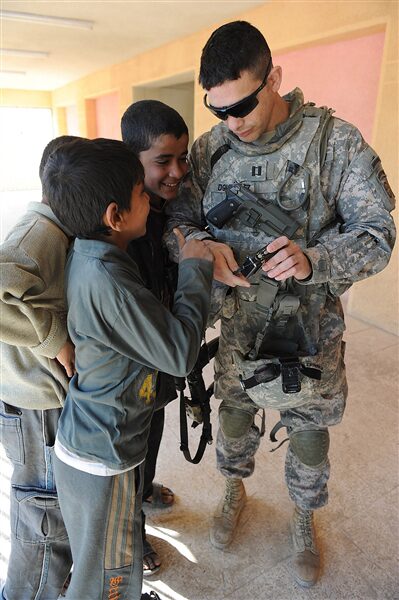
U.S. Army soldiers interacting with Iraqi children during a deployment, showing the complex human experiences of combat veterans. Image: The U.S. Army | Public domain via Wikimedia Commons
2. Avoidance
Avoiding places, activities, or people that trigger memories (e.g., crowded spaces, loud noises, fireworks)
Refusing to talk about or think about the traumatic experience
Emotional numbness — a protective mechanism that can destroy relationships
Withdrawing from previously enjoyed activities
3. Negative Changes in Thinking and Mood
Persistent negative beliefs about oneself (“I’m broken,” “I should have done more”)
Feelings of detachment from family and friends
Inability to experience positive emotions
Loss of interest in life
Survivor’s guilt
Hopelessness about the future
4. Changes in Physical and Emotional Reactions
Hypervigilance: Being constantly on guard, scanning for threats in civilian environments
For Ronnie McNutt, PTSD from his Iraq deployment was a foundational factor in his declining mental health. Combined with depression, a painful breakup, employment stress, and pandemic isolation, the cumulative burden became overwhelming.
Barriers to Treatment for Veterans
Despite the availability of effective PTSD treatments, many veterans face significant barriers to getting help:
Stigma
Military culture emphasizes toughness, resilience, and self-reliance. Seeking mental health treatment can be perceived as weakness — a betrayal of the warrior ethos. This stigma is often internalized, making veterans reluctant to acknowledge their symptoms even to themselves.
Access Issues
Geographic barriers: Many veterans live in rural areas far from VA facilities — Ronnie lived in northeastern Mississippi, where mental health resources are limited
Wait times: Long waits for VA appointments can discourage veterans from seeking or continuing treatment
Bureaucratic complexity: Navigating the VA system can be overwhelming, especially for veterans already struggling with cognitive and emotional challenges
Reserve and Guard Challenges
Reserve and National Guard members like Ronnie face additional barriers. After deployment, they return to civilian communities that may lack the military support structures available on active-duty installations. They may not have the same access to VA services, and their civilian employers and social networks may not understand their experiences.
Evidence-Based Treatments for PTSD
Multiple treatments have strong evidence for effectiveness in treating combat-related PTSD:
Cognitive Processing Therapy (CPT)The green ribbon, symbolizing mental health awareness and support for veterans struggling with PTSD and other conditions. Image: MesserWoland via Wikimedia Commons | Licensed under CC BY-SA 3.0 via Wikimedia Commons
CPT helps veterans examine and modify unhelpful thoughts about their trauma — beliefs like “I should have done something differently” or “The world is completely dangerous.” It typically involves 12 sessions and has strong research support.
Prolonged Exposure Therapy (PE)
PE involves gradually approaching trauma-related memories, feelings, and situations that the veteran has been avoiding. By facing these safely in a therapeutic setting, the fear response gradually decreases. PE typically involves 8-15 sessions.
Eye Movement Desensitization and Reprocessing (EMDR)
EMDR uses guided eye movements during recall of traumatic memories to help the brain process and integrate those memories. It is recognized by the VA and Department of Defense as an effective PTSD treatment.
Medication
Selective serotonin reuptake inhibitors (SSRIs) like sertraline (Zoloft) and paroxetine (Paxil) are FDA-approved for PTSD treatment. Prazosin may help with PTSD-related nightmares. Medication is often most effective when combined with psychotherapy.
Complementary Approaches
Emerging evidence supports additional approaches including yoga, mindfulness meditation, service dogs, equine therapy, and physical exercise programs. While these should not replace evidence-based treatments, they can be valuable supplements.
Resources for Iraq War Veterans with PTSD
Crisis Support
988 Suicide & Crisis Lifeline: Call or text 988 — press 1 for Veterans
Give an Hour: Free mental health services for veterans — giveanhour.org
Peer Support
Team Red White & Blue: Community through physical and social activity
The Mission Continues: Veterans serving communities
Iraq and Afghanistan Veterans of America (IAVA): Peer support and advocacy
Understanding Ronnie’s Experience
Ronnie McNutt’s story illustrates the devastating reality of untreated or inadequately treated combat PTSD. He was not lacking in character, faith, or community — he was lacking in the systemic support that our veterans deserve. His story is shared here not to sensationalize his death but to humanize the statistics: behind every number in the veteran suicide data is a person like Ronnie, with family, friends, and a community that will never be the same.
If Ronnie’s story moves you to action, consider: learn the warning signs, check in on the veterans in your life, advocate for better VA funding and access, and help break the stigma that prevents veterans from seeking help.
This content is for awareness and education. If you or someone you know is in crisis, please call or text 988 for the Suicide & Crisis Lifeline. Veterans can press 1 for specialized support.
Daniel Carter is a veteran affairs correspondent and mental health advocate based in Memphis, Tennessee. A former Army medic, he now dedicates his work to raising awareness about PTSD, veteran suicide prevention, and the impact of social media on mental health. His reporting has been featured in regional and national publications covering military and veteran issues.